
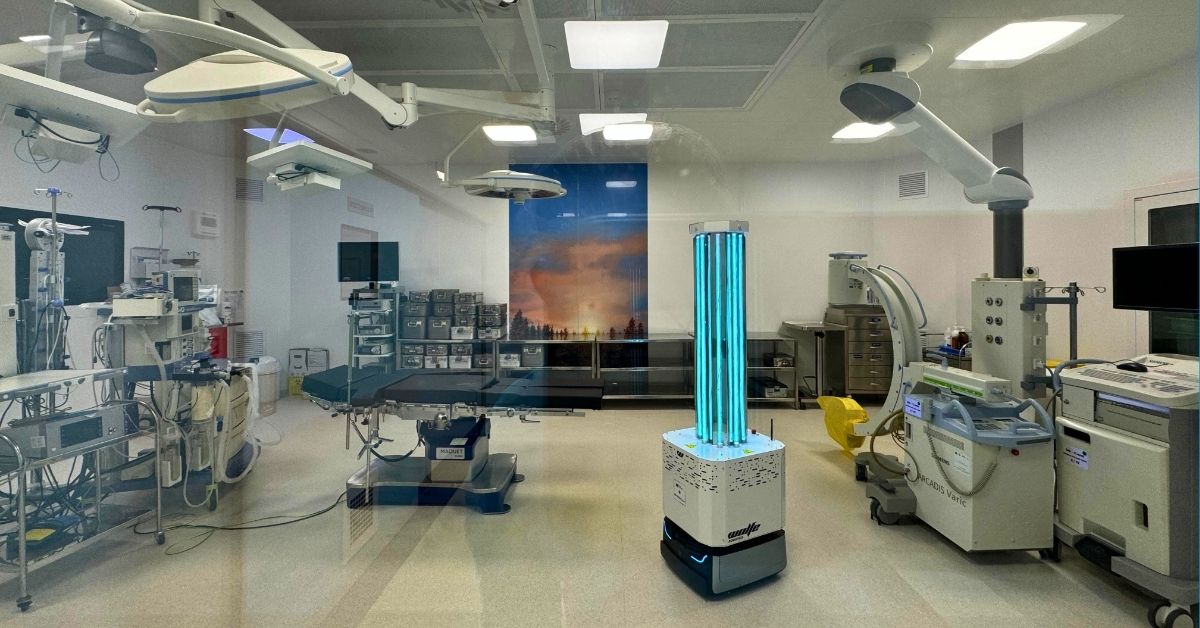
Automation, UV-C robotics, and smart medical infrastructure are beginning to transform the way hospitals manage healthcare-associated infections, operational efficiency, and patient safety. In a context where high rates of healthcare-associated infections generate increasing costs and constant pressure on healthcare systems, autonomous technologies are becoming a strategic direction for reducing risks, optimizing resources, and building the hospitals of the future.
In recent years, hospitals have invested heavily in digitalization, medical infrastructure, and modern equipment. However, one of the most costly challenges remains insufficiently addressed: healthcare-associated infections and their economic impact on healthcare infrastructure.
Today, healthcare-associated infections are no longer just a medical issue. They have become a major economic and operational challenge for healthcare systems around the world.
The World Health Organization considers antimicrobial resistance one of the greatest global health threats, while reducing healthcare-associated infections is becoming a critical component in limiting excessive antibiotic use and developing more efficient healthcare infrastructure.
The Invisible Cost of Healthcare Systems – Healthcare-associated infections
In Romania
Romania is one of the examples where the operational pressure generated by healthcare-associated infections is becoming increasingly visible at the level of healthcare infrastructure and healthcare system costs.
Official estimates indicate that approximately five Romanians lose their lives every day due to healthcare-associated infections, although specialists believe the real impact is significantly higher because of historical underreporting and the difficulty of fully monitoring these cases.
This issue generates not only a major medical impact, but also significant economic and operational pressure on hospital infrastructure and medical resources.
- the estimated real rate of healthcare-associated infections is approximately 5–7% of hospital admissions
- the indirect and direct economic impact is estimated at over EUR 100–300 million annually
- antibiotic consumption significantly exceeds the OECD average (26 vs. 16 daily doses / 1,000 inhabitants)
- Romania faces one of the lowest levels of medical staff in the EU, with approximately 3.5 doctors per 1,000 inhabitants compared to the European average of 4.1
At the same time, preventable mortality remains more than 70% higher than the OECD average, reflecting the structural pressure on the healthcare system.
In Europe
- more than 4.3 million healthcare-associated infection cases annually
- approximately 16–25 million additional hospitalization days
- estimated costs between EUR 5.5 and 24 billion annually
/ul>
In the United States
- between USD 28 and 45 billion in direct annual costs
- approximately 1.7–2 million affected patients
- more than 90,000 deaths annually
What Would Happen If We Reduced Healthcare-Associated Infections by Just 10–20%?
If Romania managed to reduce healthcare-associated infection rates by just 10%, the positive economic impact on the healthcare system could exceed EUR 50 million annually.
In a 20% reduction scenario, savings generated through operational optimization and lower associated costs could exceed EUR 100 million annually.
These savings would come from reducing hospitalization duration, optimizing bed utilization, lowering antibiotic and complication-related costs, and increasing the operational efficiency of hospitals.
Why Automation Is Beginning to Transform Hospital Infrastructure
In major healthcare economies, hospitals are starting to treat indoor air and surfaces exactly the way they treat IT infrastructure today: as critical infrastructure.
This is why we are seeing strong acceleration in:
- autonomous robotics
- automated UV-C air and surface disinfection
- real-time monitoring
- digital traceability
- AI for operational control
- intelligent indoor environment management
This transformation is not happening only in healthcare. The global industry is going through one of the fastest transitions toward automation, robotics, and artificial intelligence.
More and more hospitals and healthcare organizations are investing in technologies capable of reducing operational risks, optimizing processes, and building safer and more efficient healthcare infrastructure.
Other useful resources from the www.wolfe.ro blog:
- Nosocomial Infections – An Invisible Epidemic in Romania
- Wolf-e Robotics: UVC Light Disinfection for Air and Surfaces
- Wolf-e Robotics in the USA. Accelerating Global Expansion.
_______________________________________________________________________________________
We are Wolf-e Robotics, and every day we work to support our mission of disinfecting the air and surfaces in the places where we work, learn, and spend our time. Through disinfection with intelligent UVC light equipment and mobile robots, we provide the most efficient and environmentally friendly method of inactivating microorganisms on surfaces and in the air. With applicability in the medical, commercial, transportation, education, and corporate sectors.
Follow us on Facebook, Twitter and LinkedIn și X!


