
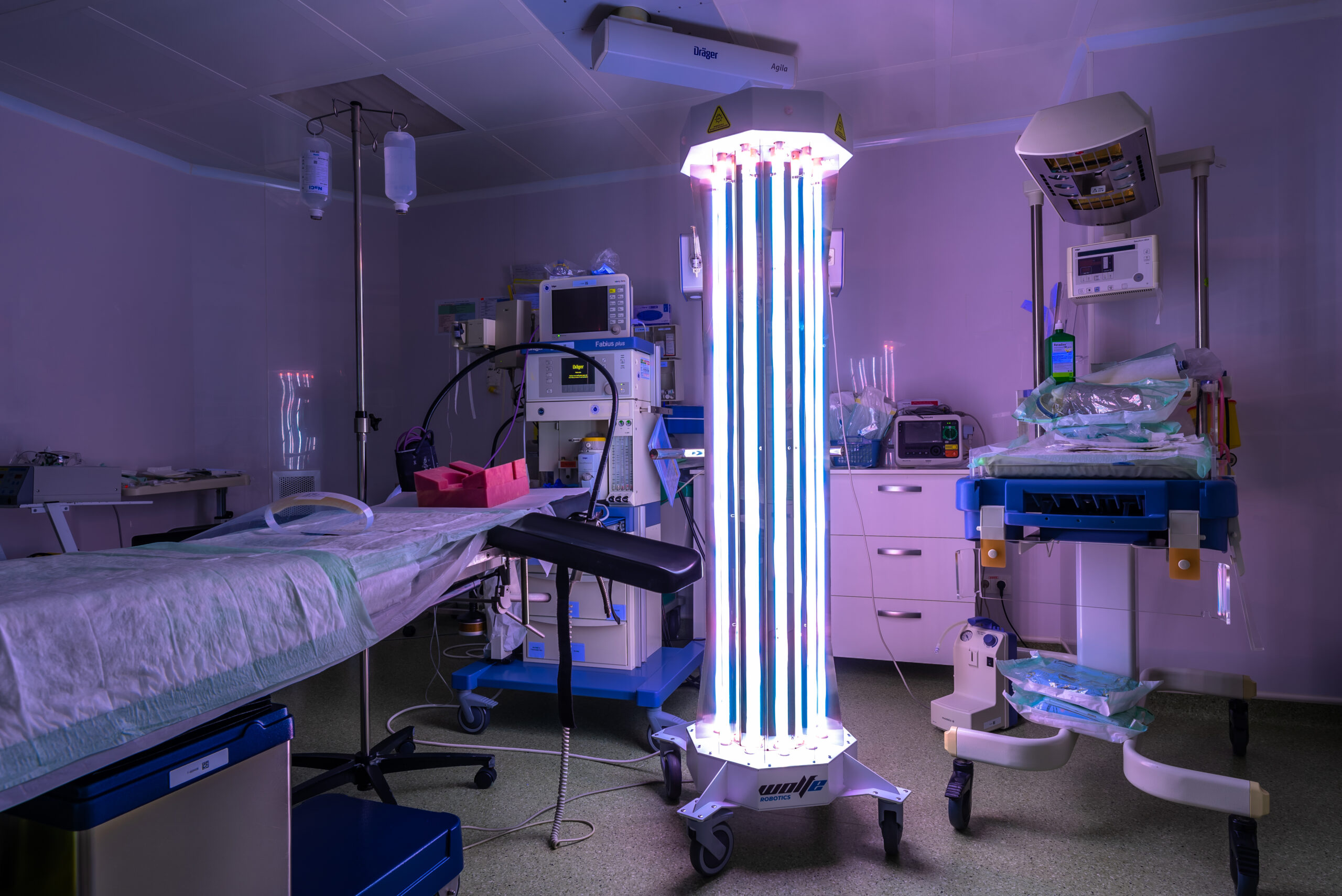
Air disinfection and surface disinfection address different exposures, even when we use the same UV-C technology. In an occupied waiting area, the objective may be to reduce exposure to airborne microorganisms. In a vacated room, after cleaning, we aim to treat the surfaces specified in the protocol. We start with this distinction when discussing the selection and organisation of interventions together with healthcare teams.
For infection prevention physicians, quality leads and hospital managers, the useful question is which risk we want to control in each space and which measure can address it under actual working conditions. A joint plan for air and surfaces makes sense when it keeps the objectives, safety conditions and evidence for each intervention distinct.
New research, a necessary distinction
A study published in Scientific Reports on 7 November 2026 describes an emergency department prototype combining physical isolation, HEPA filtration and automated UV-C disinfection. Its evaluation in an experimental replica of an emergency department is a demonstration of feasibility. We do not present it as evidence that the system reduces HAIs in patients, and we do not attribute its results to Wolf-e Robotics products.
For hospital practice, this topic is worth following because it brings several protective barriers into the same discussion. However, we suggest starting with an immediately applicable decision: separating, in the prevention plan, what happens while a room is occupied from what can be done after it has been vacated.
Air disinfection in occupied spaces
CDC/NIOSH describes upper-room germicidal UV as a supplementary measure alongside ventilation and filtration. Its operation depends on air circulating through the treatment zone and on correct design, installation and testing. Radiation directed or reflected into the occupied zone can harm eyes and skin. These conditions cannot be extrapolated to every UV-C device.
Before selecting a solution, we recommend clarifying who uses the space, how long it remains occupied, how air circulates and which installations are already in place. The technical assessment must establish positioning and permitted use for the specific equipment. The label “for air” does not, on its own, authorise operation in the presence of people.
In the implementation proposal, ask for normal operation and maintenance situations to be described separately. Staff working on installations must know when sources are switched off and who confirms that equipment can return to service. This keeps safety part of how the space is organised.
Surfaces require a different intervention window
For surfaces, cleaning and disinfection are organised according to the use and risk of the area; the CDC environmental services guideline explains the role of hand contact and the importance of frequently touched surfaces. UV-C supplements these measures. It does not remove soil and does not universally replace cleaning, hand hygiene or other precautions.
For direct-exposure equipment requiring the room to be vacated, the plan must allow a period of controlled access. Distance and shadowed areas influence surface exposure; a cycle intended for one configuration does not automatically transfer to a rearranged room. These aspects are checked against the device instructions and the approved protocol.
We recommend that changes to furniture or a room’s purpose trigger a review of the procedure. Staff responsible for UV-C disinfection of air and surfaces need instructions that reflect conditions on the ground and a designated person to clarify deviations.
A joint plan with separate indicators
Romanian data provide a reference for the organisation of spaces: in the ECDC 2022–2023 sample, which included 53 hospitals and 21,866 patients, 4.5% of beds were in single rooms. This indicator describes the layout of spaces in the sample, rather than current national isolation availability or UV-C effectiveness.
We suggest linking each space in the local plan to its intended objective, the selected measure and responsibility for verification. For air, monitor system operation and maintenance according to its configuration. For surfaces, monitor room preparation and procedure execution. Reduced microbial contamination and reduced infections are different outcomes requiring different evidence.
When analysing HAIs, an increase in reported cases alone does not demonstrate worsening safety. Nor does better detection automatically explain the entire increase. Comparison requires examining definitions, diagnosis, the patient population and reporting practices.
About Wolf-e OS
Through Wolf-e OS, for connected equipment and documented functions, we support surface-cycle records and the management of air units. Runtime recording, air-unit scheduling and notifications for filters and UV-C sources are available. These records complement disinfection traceability; they do not measure infection transmission.
We see the value of an integrated plan in being able to decide clearly which intervention is needed, where and when. Together with healthcare teams, we can maintain a shared view of the processes while preserving the differences that make each measure safe and relevant.
We are Wolf-e Robotics, and every day we work to support our mission of disinfecting the air and surfaces in the places where we work, learn, and spend our time. Through disinfection with intelligent UVC light equipment and mobile robots, we provide the most efficient and environmentally friendly method of inactivating microorganisms on surfaces and in the air. With applicability in the medical, commercial, transportation, education, and corporate sectors.
Follow us on LinkedIn, X, Facebook and Instagram!
