

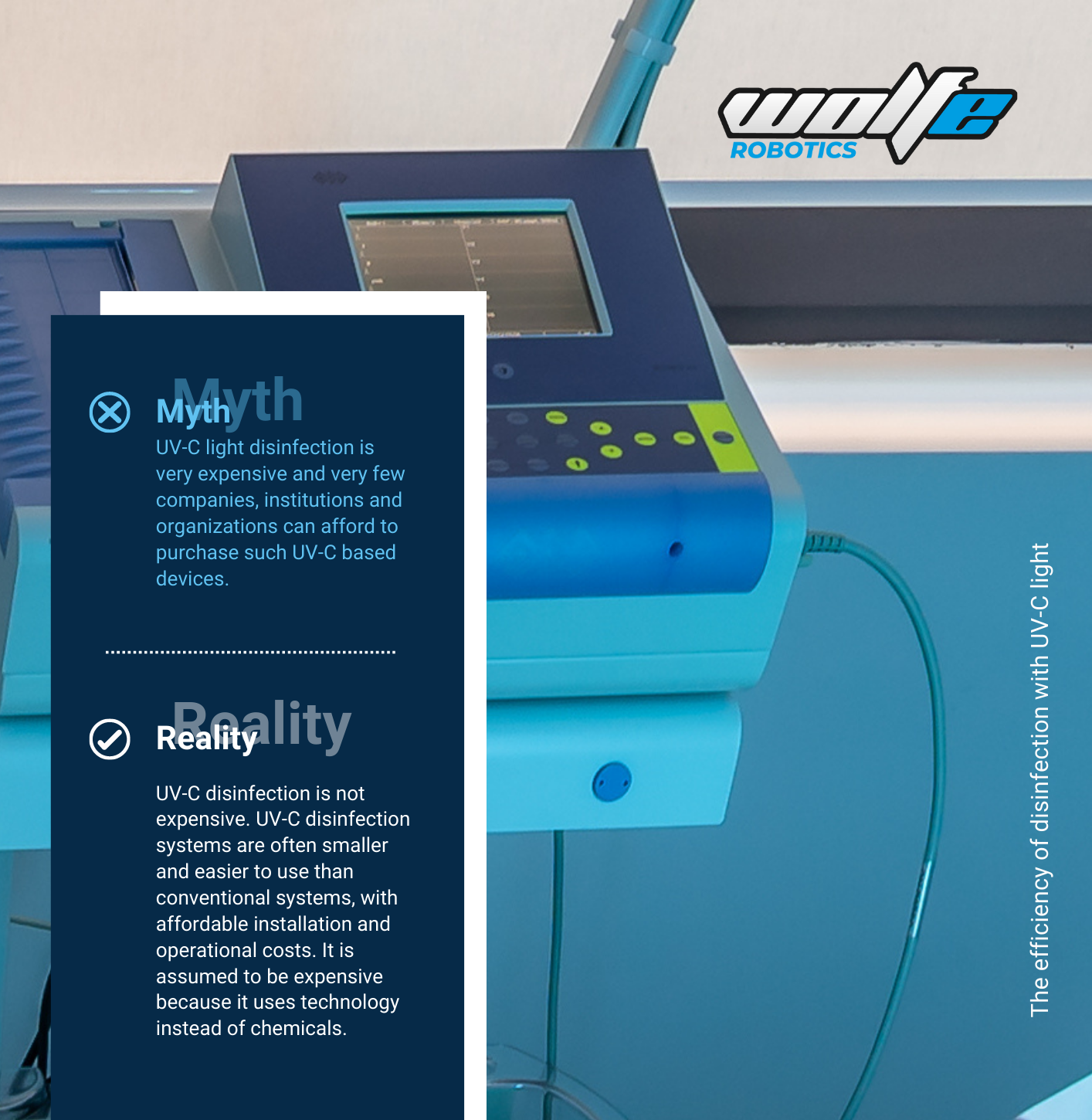
Many UV-C devices will save you money in the long run. This is because instead of having to buy numerous sprays, complementary devices, different chemicals, and disinfectants, all you need to do is purchase a UV-C disinfection device once.
After that, you can use the device as many times as you want and only need to replace the lamps and filters when necessary. Moreover, these costs can also be streamlined – in the case of manufacturers who provide complete solutions and offer subscriptions with included warranty, administration, and maintenance.
When we examine the expense of organizing monthly disinfection services using germicidal chemicals, for example, a school may spend the same amount of money for a year of substances while having daily disinfection for over 3 years utilizing a UV-C robot for the same amount.
********

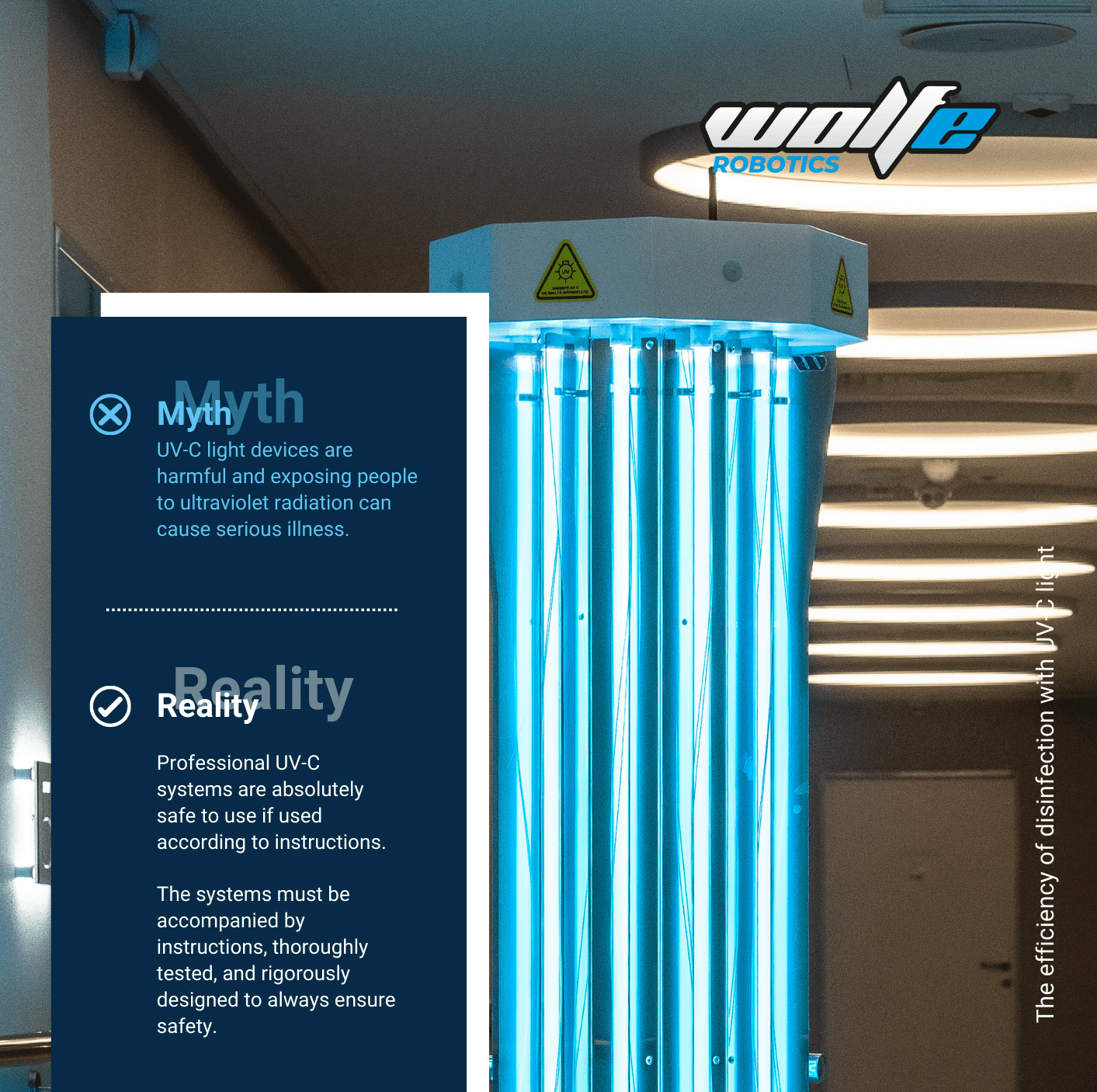
People tend to associate exposure to ultraviolet rays with risks such as sunburn, but the essential idea to understand is that UV-C light is safe if used properly.
Devices for air disinfection with lamps hidden inside the casing can be safely used around people if they use UV-C sources from reputable manufacturers that do not produce significant amounts of ozone.
Devices for surface disinfection, with exposed lamps (visible from outside the device), can be safely used ONLY if they are equipped with additional safety devices, such as presence sensors that automatically stop the lamp if movement is detected nearby. Also, operators must be trained to use these devices safely, only in spaces where no other people are present.
By using only professional UV-C disinfection systems, you ensure that ultraviolet light will only damage microorganisms – unlike the harsh chemicals in traditional cleaning products!
********
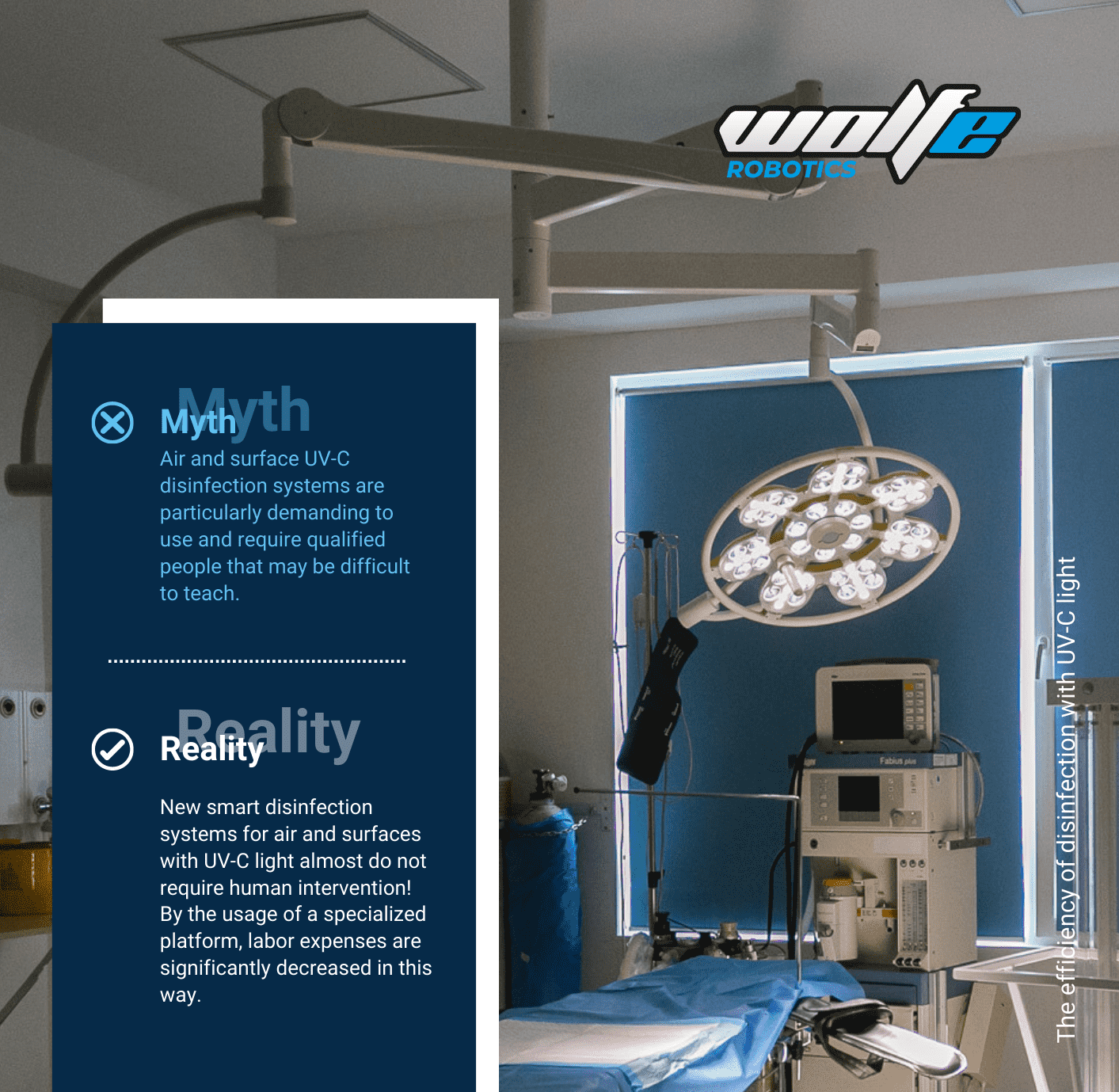
Cleaning and disinfecting manually are services with variable quality, as their effectiveness largely depends on the personnel performing the task and their motivation. Despite the fact that operating the systems is easy, there is a bias that technology is hard to access, and robotic systems induce the idea of complicated things.
Autonomous robots with UV-C germicidal lamps, placed to emit radiation in all directions, provide an efficient instrument to destroy resistant viruses and bacteria that manual cleaning techniques could overlook.
Smart equipment operates without the need for humans and can use sensors to detect movement and stop if there are people nearby. Robots can navigate through rooms or hallways and find their way back, and we repeat… all without requiring additional payroll expenses or lunch breaks or vacations.
********

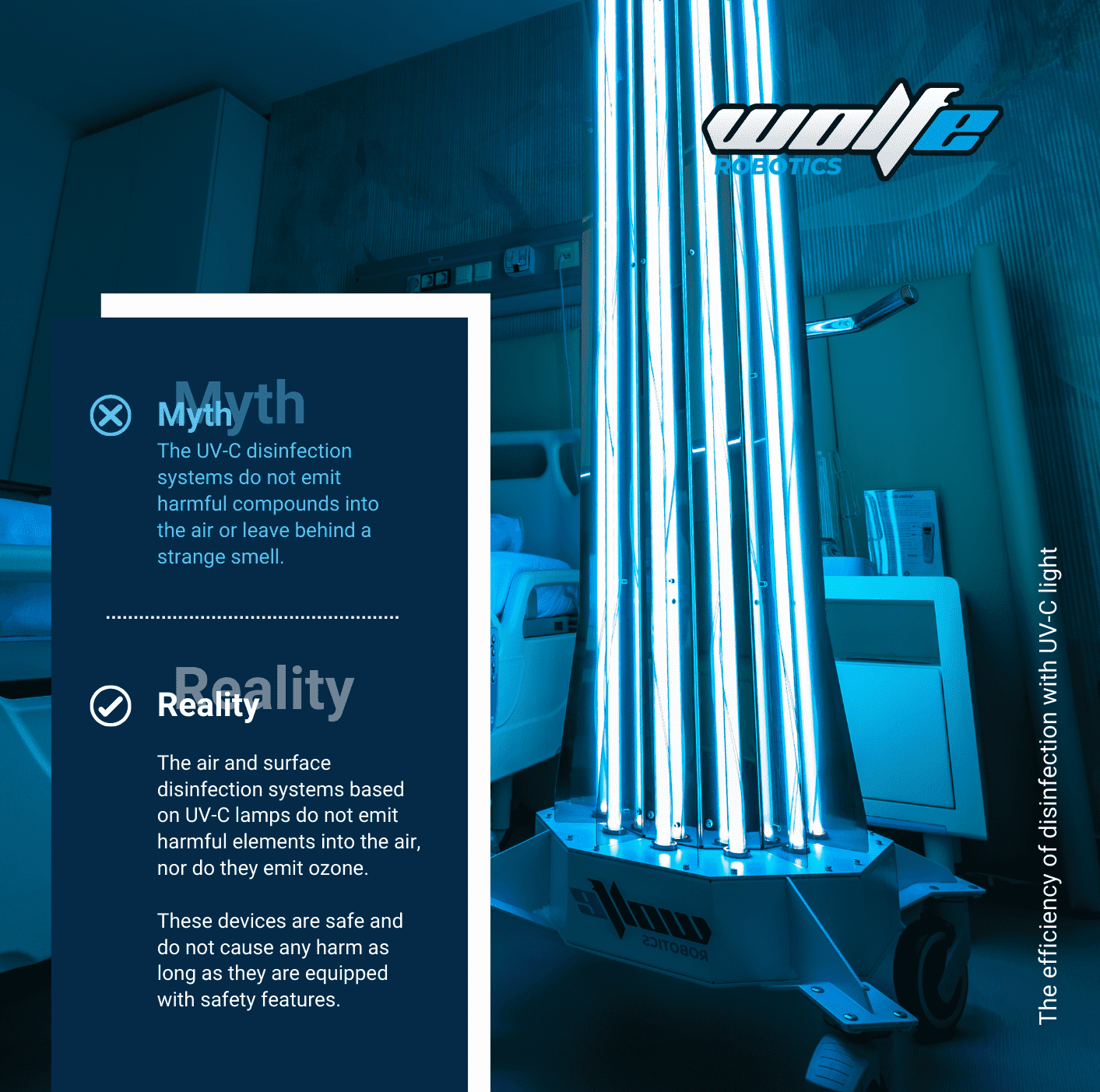
There have been concerns regarding residual odors that have been observed after rooms are disinfected with ultraviolet light and which were initially wrongly associated with ozone, a harmful gas. In reality, this odor is due to the reaction between UV-C rays and dead cells present in the dust of the disinfected room.
Up to 80% of the dust in indoor environments such as homes, offices, and other indoor spaces is made up of dead cells from human skin and hair. Skin and hair cells contain a protein called keratin, and hair contains an amino acid, cysteine.
When UV-C light hits keratin/cysteine molecules, it has enough power to break their internal chemical bonds, creating smaller organic compounds containing sulfur, called thiols. These have an extremely unpleasant odor. The human nose is extremely sensitive to thiols and can detect them at concentrations of just one part per billion.
This means that any odor present after UV-C disinfection is not dangerous, making the room immediately safe to enter after UV-C disinfection has been carried out.
********
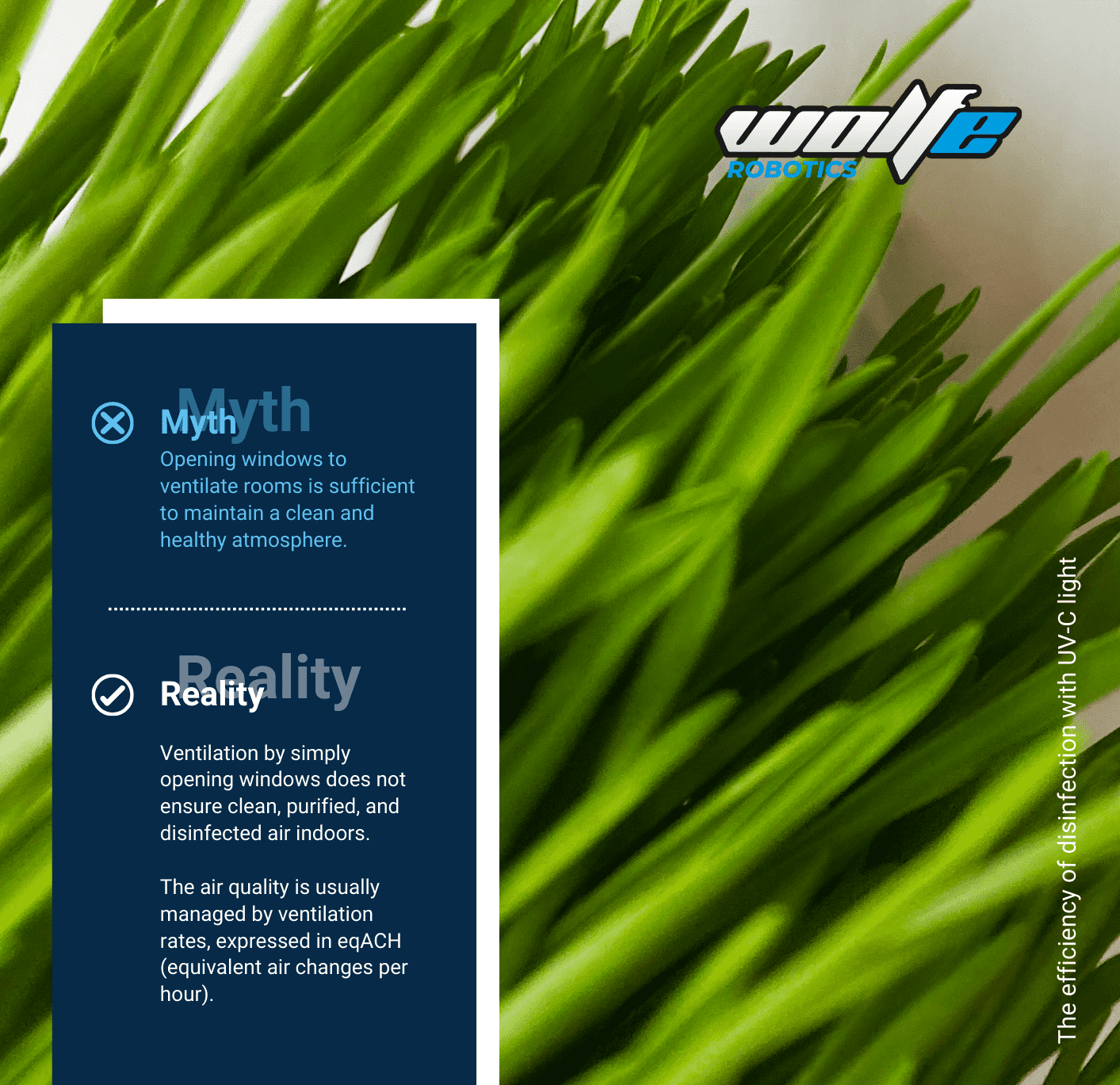
Scientific evidence confirms that aerosols are a major route of SARS-CoV-2 virus transmission causing COVID-19, making indoor air disinfection a necessity. Natural ventilation can achieve 1-2 eqACH (equivalent air changes per hour). Mechanical ventilation typically results in 2 to 5 eqACH. Equivalent ventilation through UV-C can achieve over 10 eqACH.
The ECDC recommends eqACH 15-20 for use in healthcare settings to disinfect air and protect vulnerable patients. Most mechanical ventilation systems cannot achieve this, but it is possible with UV-C!
For example, a suitable solution in the classrooms of nurseries, schools, and universities is the implementation of Wolf-BEAM germicidal UV-C devices placed at the top of the room.
We are Wolf-e Robotics, and every day we work to support our mission of disinfecting the air and surfaces in the places where we work, learn, and spend our time. Through disinfection with intelligent UVC light equipment and mobile robots, we provide the most efficient and environmentally friendly method of inactivating microorganisms on surfaces and in the air. With applicability in the medical, commercial, transportation, education, and corporate sectors.
Follow us on Facebook, Twitter and LinkedIn!
