
We pay close attention to what we consume. We choose filtered water, check food quality, and care about the safety of the products we use every day. Yet there is one essential resource we use far more often than water or food — and paradoxically think about far less: the air we breathe. So, how much does indoor air quality really matter?
An adult takes approximately 20,000–23,000 breaths per day, which means more than 8 million breaths every year. With every breath, air reaches directly into the lungs and circulatory system. And yet, unlike water or food, air is often treated as something implicit — something that simply exists.
The reality is different. As monitoring technologies, artificial intelligence, and advanced disinfection solutions evolve, indoor air is becoming a strategic field at the intersection of health, technology, and urban infrastructure.
A reality that can no longer be ignored — indoor air quality
Most people spend around 90% of their time indoors: offices, schools, hospitals, homes, or public buildings. This means indoor air becomes the main source of exposure to chemical pollutants, fine particles, microorganisms, and aerosols capable of carrying viruses and bacteria.
Research from recent years has clearly demonstrated that many respiratory infections spread through aerosols — microscopic particles that can remain suspended in the air for extended periods, especially in poorly ventilated spaces.
In other words, indoor environments are becoming a critical factor for public health.
Air and global health
The impact of air on human health is far greater than most people realize. Globally:
- air pollution is responsible for approximately 6.7 million premature deaths annually
- indoor air pollution alone is associated with more than 3 million deaths every year
- approximately 99% of the global population breathes air that exceeds the limits recommended by the World Health Organization
These figures clearly show that air is no longer only a matter of comfort or energy efficiency. It is a major public health issue.
Air also influences cognitive performance
The impact of air does not stop at health. Studies conducted in academic and corporate environments show that high levels of indoor CO₂ and pollutants can reduce concentration, decision-making ability, and cognitive performance. On the other hand, improved ventilation can reduce absenteeism, increase productivity, and enhance performance in both education and work environments.
The economic impact is significant. Some studies show that productivity gains generated by better ventilation can outweigh energy costs by more than 150 times. In other words, indoor air is not just a comfort issue. It is a matter of infrastructure, public health, and economic competitiveness.
A global market accelerating rapidly
As awareness increases, the market is evolving quickly. The global indoor air quality monitoring systems market is estimated to exceed USD 2.3 billion in 2025 and could surpass USD 4.3 billion by 2034.
At the same time, the broader indoor air technology ecosystem — including sensors, filtration systems, purification, disinfection, and smart building management — could exceed USD 32 billion by 2033. This transformation reflects a major paradigm shift: air is becoming a new technological frontier.
A new invisible infrastructure
Following the global pandemic, it is becoming increasingly clear that indoor air must be treated as critical infrastructure, just like energy, water, or digital networks. In the near future, buildings will no longer be passive spaces. They will become intelligent ecosystems capable of:
- continuously monitoring indoor air
- detecting pollutants and biological risks
- optimizing ventilation and filtration in real time
- using AI to anticipate and prevent risks
Technologies such as UV-C air disinfection, intelligent sensors, and robotic decontamination systems are already being integrated into hospitals, airports, and public buildings.
Just as digital infrastructure became critical over the past 20 years, indoor air infrastructure will become critical over the next 20.
In the coming years, we will see:
- new standards for indoor air quality
- buildings functioning as intelligent biological systems
- AI integration into air management
- convergence between healthtech, cleantech, and smart buildings
Air will become a monitored parameter as important as energy or cybersecurity.
Air disinfection with Wolf-e Robotics. Indoor air quality.
This is an important moment for us. At Wolf-e Robotics, we are entering a new stage and beginning the international expansion of our solutions, with the objective of contributing to safer, smarter, and more resilient indoor environments.
For this invisible infrastructure to function, the first step is understanding and monitoring indoor air. Modern sensor systems now allow real-time monitoring of critical parameters such as fine particles (PM2.5 and PM10), CO₂ levels, volatile organic compounds, temperature, and humidity. These data provide a clear image of air quality inside a space and enable rapid intervention when values exceed recommended limits.
We develop and integrate intelligent indoor air quality monitoring systems that transform spaces into controlled and predictable environments. Through continuous data collection and integration into digital platforms, these systems enable intelligent building management and optimize ventilation and filtration based on real indoor conditions.
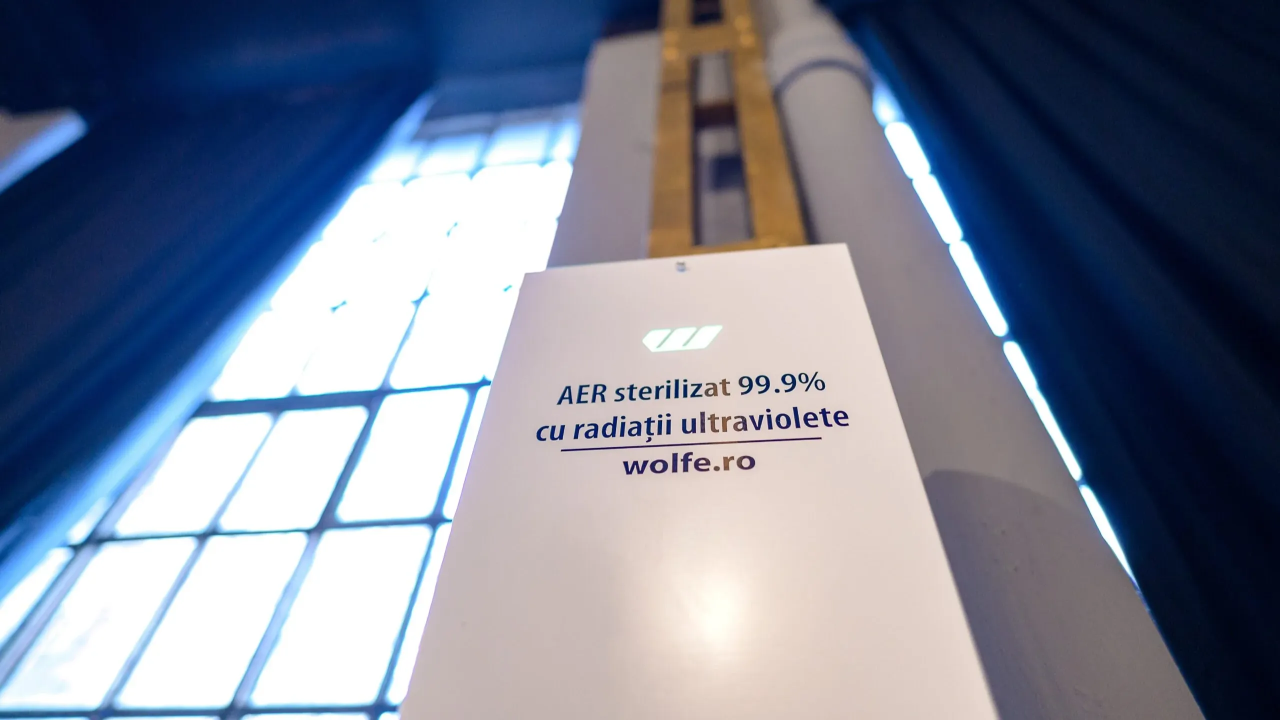
Beyond monitoring, another essential component is air disinfection and reducing the microbiological load within indoor environments. UV-C based technologies can inactivate viruses, bacteria, and other airborne pathogens without the use of chemicals. Wolf-e Robotics solutions are already used in hospitals, laboratories, airports, and other high-risk spaces.
Over the next decade, the way we manage indoor air will become an essential indicator of a society’s infrastructure quality. Just as we speak today about smart cities and sustainable buildings, we will increasingly speak about healthy buildings capable of monitoring, analyzing, and protecting the air people breathe.
The transformation is already underway. As mentioned at the beginning of this newsletter, as monitoring technologies, artificial intelligence, and advanced disinfection solutions continue to evolve, indoor air is becoming a strategic field at the intersection of health, technology, and urban infrastructure. In this new reality, protecting the air we breathe is no longer just an option — it is becoming a technological and societal responsibility.
__________________________________________________________________________________________________
We are Wolf-e Robotics, and every day we work to support our mission of disinfecting the air and surfaces in the places where we work, learn, and spend our time. Through disinfection with intelligent UVC light equipment and mobile robots, we provide the most efficient and environmentally friendly method of inactivating microorganisms on surfaces and in the air. With applicability in the medical, commercial, transportation, education, and corporate sectors.
Presence on Social Media on Facebook, Instagram, LinkedIn and X for updates from Wolf-e Robotics. You can also contact us directly at office@wolfe.ro.
