
In this month’s newsletter, we look at “August and the lesser-known seasonality of hospital-acquired infections.” When we think about hospital-acquired infections, we usually associate them with the colder months. However, data from hospital settings reveal a more nuanced picture. For certain healthcare-associated infections, warmer months, including August, may coincide with a higher incidence.
Some hospital-acquired infections show a lesser-known pattern: summer seasonality. One study analyzing more than 211,000 bloodstream infections reported across 132 hospitals found that infections caused by certain Gram-negative bacteria were 12% to 52% more frequent during the summer months than in winter, with differences depending on the microorganism.
Another study, conducted across 104 hospitals, found that certain healthcare-associated infections caused by Gram-negative bacteria peaked in August, with incidence approximately 59% higher than during the month with the lowest rates.
Why can some hospital-acquired infections increase during summer?
Temperature is one of the factors studied in relation to the seasonal variation of bacterial infections. Higher ambient temperatures have been associated with an increased incidence of infections caused by certain Gram-negative bacteria, including E. coli, Klebsiella, Pseudomonas, and Acinetobacter. However, the explanation is more complex and cannot be attributed to temperature alone.
Microbiological risk has its own seasonality, which may differ from the patterns we intuitively associate with infections.
The seasonality of infections can be influenced by a combination of factors, including environmental conditions, microorganism characteristics, patient vulnerability, the use of medical devices, antibiotic use, and specific patterns of activity within healthcare facilities.
How common are healthcare-associated infections?
Beyond seasonal variations, healthcare-associated infections remain a major patient safety concern worldwide. According to the World Health Organization, out of every 100 patients in acute-care hospitals, approximately 7 patients in high-income countries and 15 patients in low- and middle-income countries acquire at least one healthcare-associated infection during their hospital stay. Patients in intensive care units, newborns, and other vulnerable groups face an even higher risk.Infections can occur in many different circumstances: following surgical procedures, in connection with catheters or other medical devices, through direct or indirect contact, or through the transmission of microorganisms between patients, healthcare workers, equipment, and the healthcare environment.
The hospital environment is part of the equation
In healthcare settings, microorganisms may be present on surfaces and equipment, as well as in water or air. Some surfaces can become reservoirs, while microorganisms may also be transferred indirectly to patients via hands.
A space that looks clean is not necessarily free of microorganisms.
For this reason, environmental cleaning and disinfection are fundamental components of infection prevention and control. Particular attention is given to frequently touched surfaces, including bed rails, bedside tables, door handles, medical equipment, and other surfaces in the immediate patient environment.
Prevention is not a single measure
There is no single intervention that can eliminate the risk of healthcare-associated infections. Prevention relies on multiple layers of protection working together: hand hygiene, environmental cleaning and disinfection, appropriate processing of medical equipment, proper use of medical devices, infection surveillance, compliance with protocols, and staff training. These measures are complemented by continuous assessment of how procedures are implemented and regular feedback to healthcare teams.
International best practices
Nordic countries and the Netherlands report some of Europe’s lowest rates of healthcare-associated infections and antimicrobial resistance through integrated, bundle-based approaches that combine hand hygiene, standardized and monitored cleaning, patient isolation, admission screening, responsible antibiotic use, and continuous surveillance of key indicators. Within this framework, no-touch technologies, including UV-C disinfection, can be used as complementary measures rather than replacements for established cleaning and disinfection procedures.
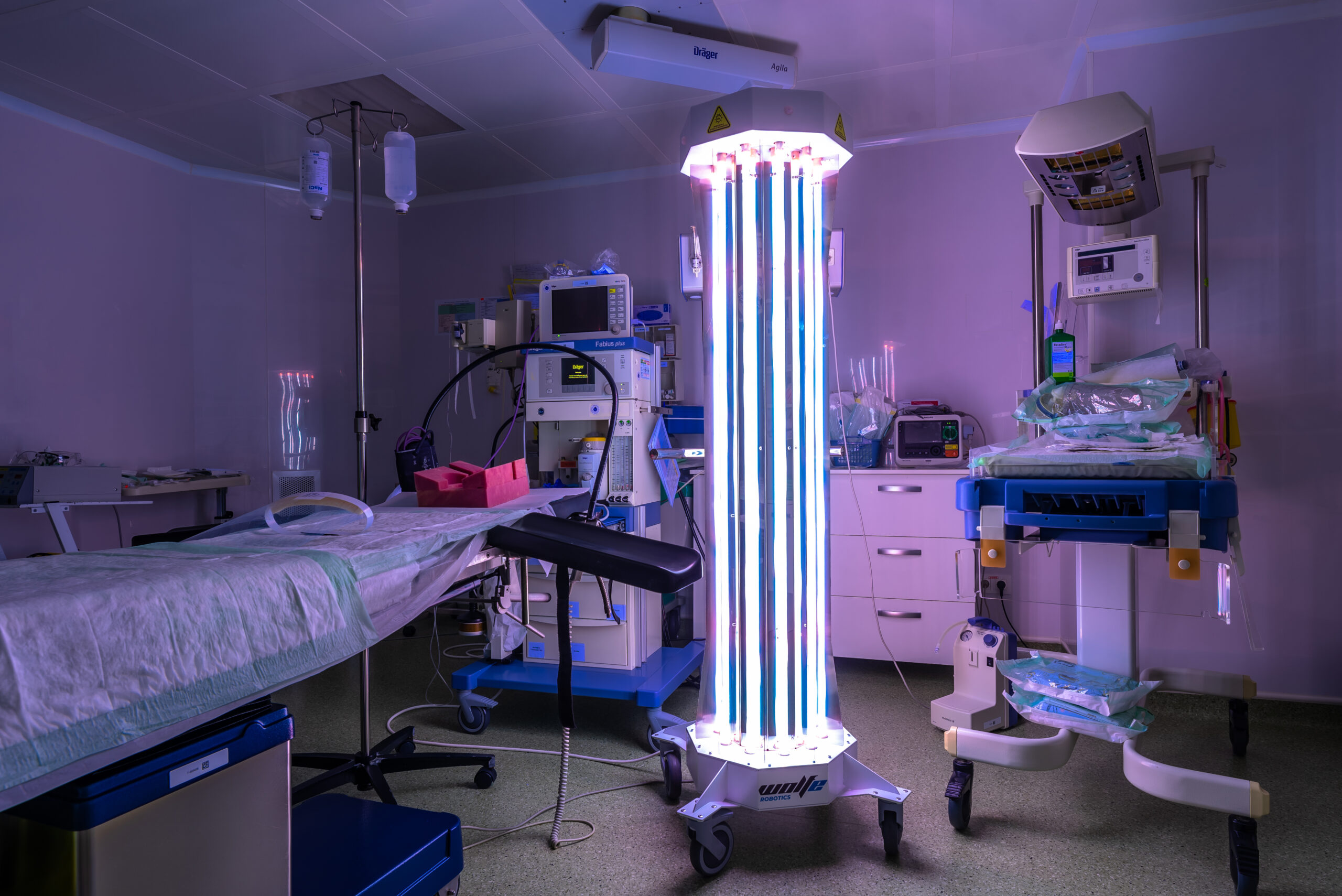
This is also the approach we support at Wolf-e Robotics. Technology is one component of infection prevention, not a stand-alone solution. CoBot Ultra, our autonomous UV-C disinfection system, is one example: its role is to complement existing protocols and contribute to a controlled and consistent disinfection process.
In preventing hospital-acquired infections, results do not depend on a single intervention, but on how effectively all prevention measures work together.
What does August actually tell us?
Perhaps the most interesting aspect of infection seasonality is that it can challenge our intuition. During summer, we tend to think less about infections. We associate the colder months with influenza, respiratory viruses, and crowded hospitals. But microorganisms do not all follow the same calendar.
For certain bacteria and certain types of infection, the warmest months of the year may be precisely when vigilance needs to remain high.
Read more:
-
Wolf-e Robotics: From SelectUSA to Romania–U.S. Partnerships
-
How do we choose the most efficient UV disinfection robot for air and surfaces?
-
Best Practices Worldwide in Controlling Nosocomial Infections
_______________________________________________________________________________________
We are Wolf-e Robotics, and every day we work to support our mission of disinfecting the air and surfaces in the places where we work, learn, and spend our time. Through disinfection with intelligent UVC light equipment and mobile robots, we provide the most efficient and environmentally friendly method of inactivating microorganisms on surfaces and in the air. With applicability in the medical, commercial, transportation, education, and corporate sectors.
Follow us on LinkedIn, X, Facebook and Instagram!
